A clinician’s honest case
The fat is visible.
The resistance isn’t.
Melt the resistance, and the fat follows.
You’ve spent years fighting the thing you can see.
But the real weight is the one you can’t — the resistance between you and the life you already want.
Below: why every diet you tried was doomed by biology, why willpower is a myth that collapsed under science, and how changing what runs underneath makes unhealthy fat fall away. With real clients. And the research, in full.

Before I show you a single study, let me take you somewhere you already know by heart.
10:40 p.m.
The kitchen light is off. You know exactly where the packet is.
You aren’t hungry.
You know you aren’t hungry.
You’ve known it, at this exact hour, for about eleven years.
Tomorrow you’ll be strict again. You’ve been strict before — the gym membership, the chart on the fridge, two weeks on soup. Some of it worked. For a while.
Then something happened at work, or at home, and the old pattern was back within three days. Like it had been waiting.
The part of you that reaches for the packet doesn’t read diet charts. It never has.
It learned, a long time ago, that food handles something. Boredom. A hard day. The silence after everyone’s asleep. And it does that job without asking your permission.
You can fight it with discipline. Most people do — for a few weeks at a time.
Or you can become someone it no longer works for.
You think this is a willpower problem. Give me two minutes and I’ll show you it isn’t.
In one breath
Here’s the whole idea, before we go deep:
Your body defends its fat. Willpower is a fuel tank that was never real. And the levers that actually move — how you sleep, how you feel, who you believe you are, what runs on autopilot — are all in the mind, not the meal plan.
Change those, and eating changes on its own. The unhealthy fat falls away as a byproduct — not a battle.
That’s the claim. The rest of this page is the proof: my story, my method, my clients, and every study, linked.
But why should you trust a word of it? Fair. So let me tell you how I found this out — the hard way.
Why I’m the one telling you this
A dressing room in Chandigarh. And nothing fit.
Around 2011 my life was wild. One week at minus thirty-five, the next in wet heat, across time zones, eating whatever was in front of me. I didn’t know what a good diet was. I didn’t know what real exercise was.
I hit 95 kilos without noticing it happen.
Then that dressing room. I’d carried in an armful of clothes and none of it fit. Not close. I put every piece back on the rack and decided I would not buy a single thing until the weight was gone.
I got myself checked. The diagnosis was hypothyroidism — which drains your energy, pulls your mood down, and puts weight on. I manage it with my doctor to this day, and I always will. I’m telling you because it’s the wake-up call that started all of this — and it’s exactly why this page says plainly: if you have thyroid disease, this work sits alongside your physician. It doesn’t replace them, and it isn’t a treatment for the condition itself.
I decided it would not beat me. So I opened everything I had — meditation, breath work, tai chi, qigong, yoga, hypnosis, psychology — and ran my own protocol on myself.
It worked. And it nearly cost me. I lost a lot of weight, fast, and my blood work paid for it: haemoglobin down to 8, liver enzymes wrecked.
I tell you that not to impress you, but to warn you. That crash was not the method. It was the wall I hit — the wall that sent me looking for a better way.
And on the other side of that wall, I found the real question. It changed everything.
The question that changes everything
What if the weight was never the problem?
What if it’s a symptom — the visible smoke from a fire you can’t see?
Not “how do I force the fat off,” but: what if a person simply ate well because it felt natural? Ate enough to stay a touch hungry? Enjoyed moving? Laughed more, lived more?
What if the right life were the easy one?
Three things decide your body: how you sleep, how you eat, how you move. Fight them head-on and they snap back. Change what sits underneath them — and they change on their own.
“Put your mind on a diet, and the fat in your body will vanish.”
Dr. Maruti Sharma
So if the weight isn’t the problem… what is? Three things. You’ll recognise every one of them.
The real problem, in three parts
Name it before you fight it.
After twenty-five years and clients in over a hundred countries, almost every stuck case comes down to these three. Read them slowly.
1 · Poor self-control
Not weakness — a skill nobody ever taught you. Willpower you were never trained to use, failing exactly where it always fails.
2 · Unexamined beliefs
“Three meals a day is right.” “Celebration means hogging.” Inherited rules about food you’ve never once questioned.
3 · Unhappiness & fear
Loneliness, anxiety and dread mistaken for hunger — so the body reaches for food to fix a feeling food can’t touch.
“When hungry you eat; when full, you taste.”
Dr. Maruti Sharma
Here’s how I work on all three at once — the part no single method can do.
The method
Four tools. One method. Something the parts alone can’t do.
I discovered it by watching the finest practitioners I ever met — extraordinary meditators, lifelong yogis, gifted therapists — still struggle with their own weight. Mastery of one discipline never delivered the body. Each had mastered one lever. None had the whole board.
So I combined them. Not meditation alone, or hypnosis alone, or NLP alone, or psychotherapy alone — each moves something, none moves everything — but all of them, sequenced so they compound. I call it MELT, the fat-loss application of my wider method, MTP™ — the Meditation Trance Protocol.
Map — what is actually driving this?
Meditative inquiry. Before anything changes, you learn to see the moment the reaching starts, and who you’re being when you do it.
Meditative inquiryEase — what feeling keeps feeding it?
Nobody overeats for no reason. We deal with the job the food is doing — the numbing, the comfort, the silence — not just the food on top.
PsychotherapyLoosen — what automatic link keeps firing?
The cue fires and the reach follows before you decide: 10:40, the dark kitchen, the packet. That link was learned. It can be un-learned.
Hypnosis & tranceTrain — what becomes your new default?
A new default is the whole product. The reach is replaced by a response you practise until it runs on its own — until it’s simply who you are.
Daily practice“It is not meditation, or hypnosis, or NLP. It is something far more powerful that emerges when the best of them meet your own brilliance.”
Dr. Maruti Sharma
Talk is cheap. So let me show you the people.
The proof
Real people. My clinical work — not a claim.
Shared with their written permission — among them physicians who understand exactly what they signed up for. Individual results, not a typical outcome. Every one of them also changed how they slept, ate and moved. That is the point of the work, not a side note to it.

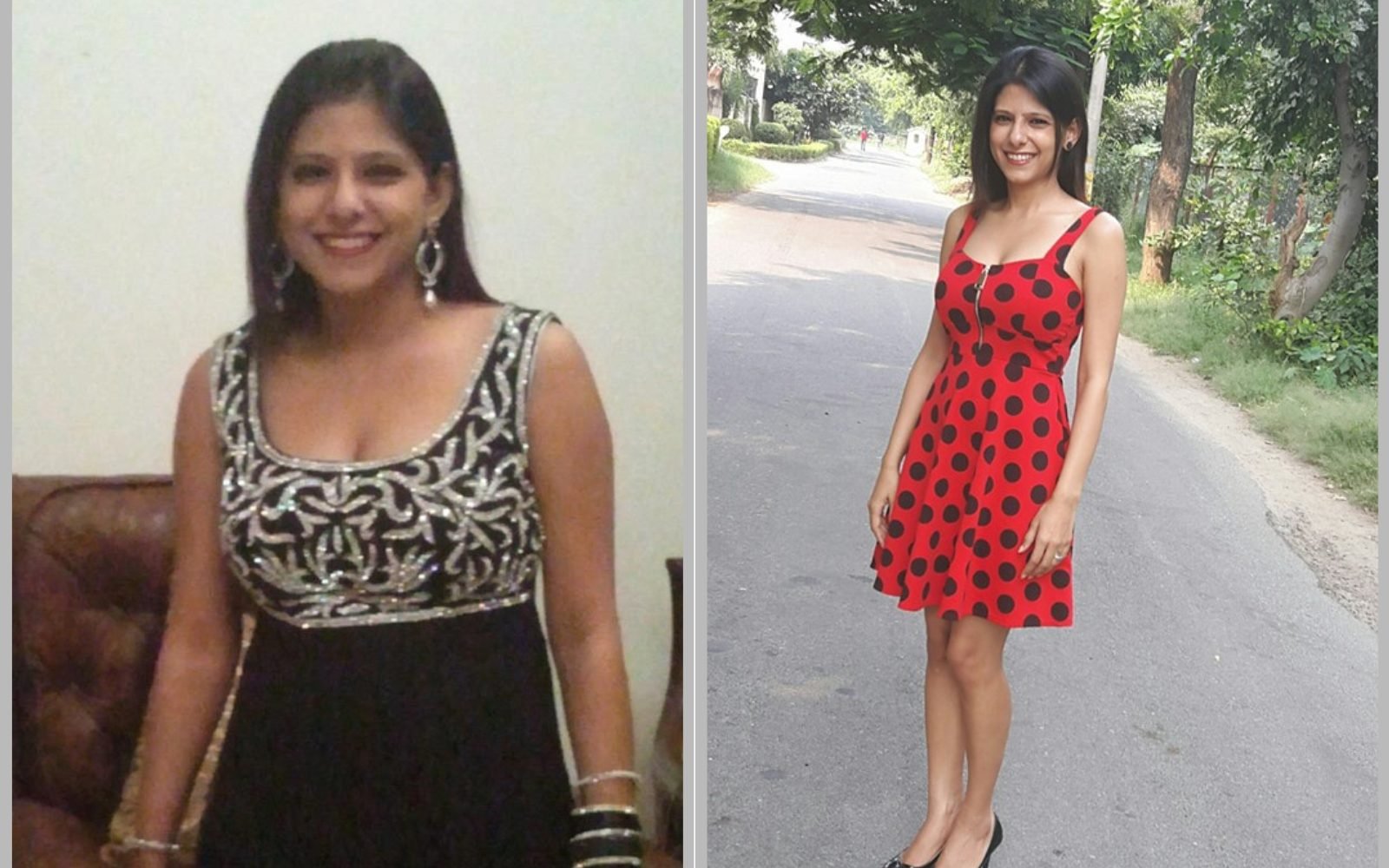


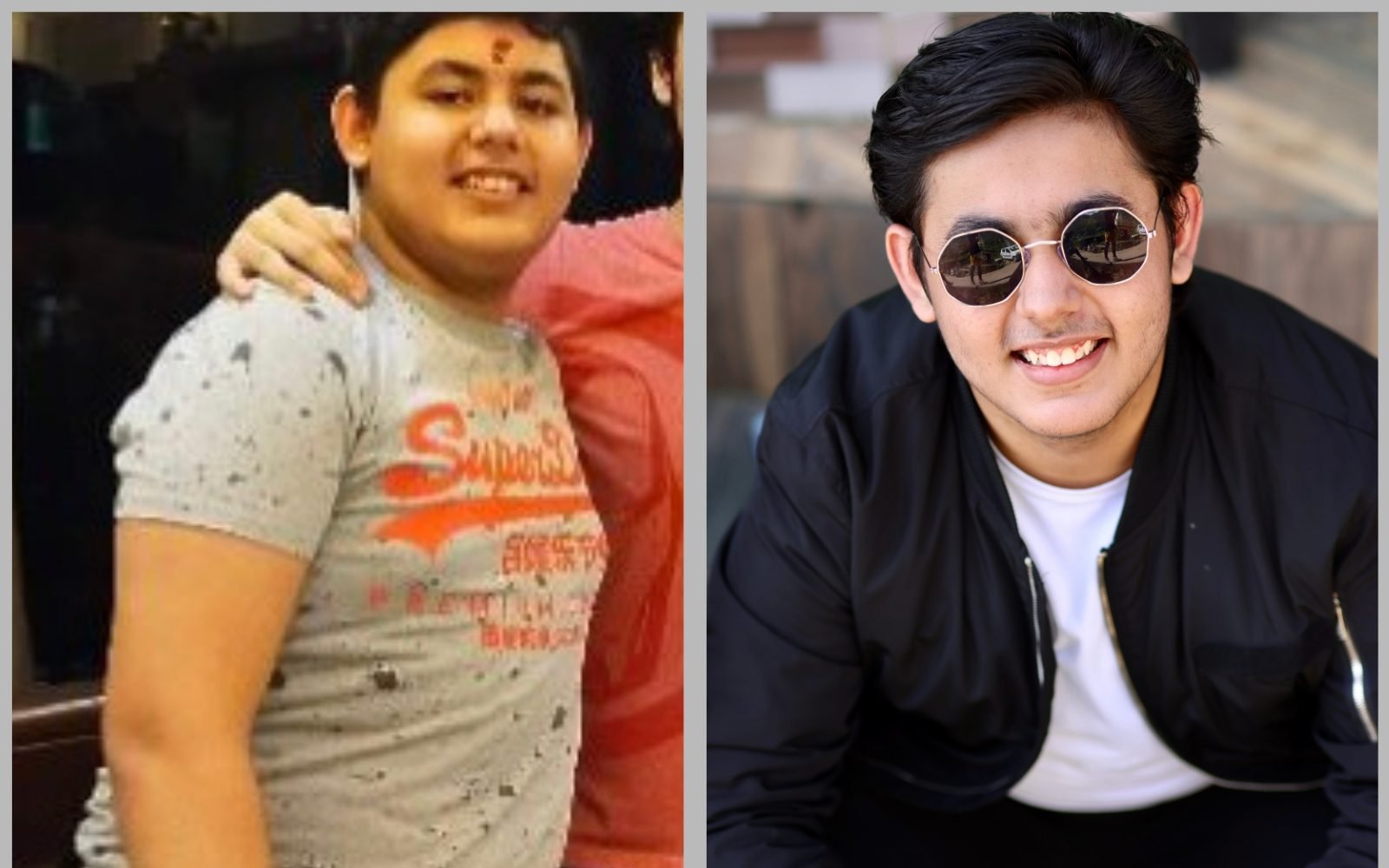
Every story here is shared with written permission.
Now — maybe part of you is thinking: “nice stories, but where’s the hard proof?” Good. That part of you is smart. Open this.
For the skeptic in you
The science — and its honest limits.
I won’t bury you in it, and I won’t oversell it. Here’s the truth, in the open: the effects of any single tool are small-to-moderate, and none of this is first-line obesity treatment. What the research does do is prove the mechanism — each lever is real. The whole, combined, is my clinical work, not a trial. Tap any question to read the evidence, every claim linked to source.
Why diets fail — it’s biology, not weakness
Your body defends its fat, for years.
Six years after The Biggest Loser, contestants’ resting metabolism ran ~700 kcal/day below what their size predicted, and most regained the weight. After any loss, the body cuts energy use 300–400 kcal/day below what the new size needs and increases hunger — the coordinated defence behind the over-80% relapse rate.
Why willpower fails — the science collapsed
“Willpower as a fuel tank” didn’t replicate.
In the largest test ever run, 23 laboratories tried to reproduce the ego-depletion effect and found essentially nothing — and 22 of them had expected it to hold. Meanwhile, people who keep weight off don’t white-knuckle it; they run on automatic routines.
Sleep — the most causal lever there is
Lose sleep and you eat more — measurably.
In randomised trials, restricting sleep raised calorie intake by hundreds of kcal a day with no change in what people burned, and drove visceral-fat gain. And broken sleep’s guideline first-line treatment isn’t a pill — it’s a psychological one (CBT-I), aimed at the racing mind.
Hypnosis & mindfulness — real, but modest
Hypnosis helps — most for those who practise.
Meta-analyses show hypnosis enhances behavioural treatment; in a large trial, the people who actually practised self-hypnosis improved satiety and lost more. The honest read: a real, modest, adjunctive effect — not magic.
Mindfulness changes how you eat — more than the scale.
Strong evidence that it improves fullness awareness and cuts cue-driven, impulsive eating; weak evidence it reduces body mass alone. That’s why meditation opens the method and doesn’t carry it.
Identity & habit — why it becomes effortless
Automatic, identity-consistent behaviour feels effortless.
A habit runs on cue-triggered automaticity and stops drawing on conscious control — which is why it feels effortless. And identity-consistent behaviour needs no manufactured motivation. New habits reach automaticity in a median ~66 days (range 18–254).
Why one discipline is never enough
Behaviour needs several levers at once.
The dominant framework in behaviour-change science — COM-B, built from 19 prior theories — holds that change needs capability, opportunity and motivation together, including the automatic engine of habit and emotion. Move one, leave the rest, and behaviour snaps back. (No trial has yet tested this specific combined system — the mechanism is proven; the whole is my clinical work.)
“Mental health is a skill — you can’t heal it with a pill.”
Dr. Maruti Sharma
This isn’t for everyone. Let me be honest about who it’s for — and who it isn’t.
Honesty
Who this is for — and who it isn’t.
This is for you if…
- You’ve tried at least twice and know the plan by heart.
- You eat well all day and lose it after dark.
- You’re tired of being told to just try harder.
- You’re willing to spend a few minutes a day on a practice.
This is not for you if…
- You have an active eating disorder — that needs specialist care, and I’ll point you toward it rather than take you on.
- You’re pregnant or under 18.
- You want a reason to skip your doctor. For diabetes, thyroid disease, PCOS or a BMI above 40, this works alongside your physician.
- You want something done to you while you do nothing.
Effortless is not the absence of work. It’s the absence of a fight.
Where this leaves you
You were never fighting with the wrong effort.
You were fighting with the wrong-sized weapon.
The body defends its fat. Willpower is a myth. The levers that move — sleep, emotion, identity, habit — are in the mind. Change those, and the unhealthy fat falls away. Not by force. As a byproduct.
If something here landed — if you recognised yourself, and you want to know more — write to me.
I take on a few people a year. Not a programme you join. A fit we both have to see. Tell me three things: what you have tried and why it did not hold, why now and not last year, and what will be true in a year that is not true today.
I read every note myself, and reply to every one, even when the answer is no.
Straight answers
Questions people ask.
Is fat loss really a psychological problem, not a diet problem?
The intake side is behaviour, and behaviour is psychological. Diets treat fat as arithmetic; the research shows the body actively defends its fat and that conscious restraint fails long term. Change the sleep, emotion, identity and habit that drive eating, and intake changes on its own. Fat loss becomes a byproduct of psychological change.
Why do diets fail even when I stick to them?
Biology. After weight loss the body lowers energy use by 300–400 calories a day below what your new size needs and increases hunger — a persistent defence of body fat behind the over-80% relapse rate. It isn’t weakness.
Isn’t this just about willpower?
No — and the science that said willpower was a depletable fuel tank collapsed under replication: 23 labs found essentially no effect. People who keep weight off run on automatic routines, not willpower.
Does hypnosis actually work for weight loss?
As a standalone cure, no. As part of a system, the evidence is real but modest — and in a large trial, the people who practised self-hypnosis improved satiety and lost more. One lever inside the method, not magic.
Can changing my mind really change my body?
Through behaviour, yes. Sleep, stress, emotion and identity are psychological and all shape what and how much you eat — sleep loss alone measurably increases intake. The mind governs the behaviours that move fat.
How long until it feels automatic?
In the best real-world study, new habits took a median of ~66 days to feel automatic — range 18 to 254 days, and missing one day didn’t derail it. Weeks to a few months of a daily practice, not 21 days and not overnight.
Is this a diet, or something I have to buy?
Neither. No meal plan, no calorie target, no banned foods. This is an account of a way of working and the science behind it. If it resonates and you want to know more, write to me at drmarutisharma@marutisharma.com.
Dr. Maruti Sharma
Who’s behind this.
25+ years · 100+ countries · Celebrities & Fortune 500 leaders
Clinical Psychology Associate, registered with the Rehabilitation Council of India (Reg. A100310). PhD in Buddhist Psychology. Board Certified Clinical Hypnotherapist and Clinical Hypnotherapy Trainer, National Guild of Hypnotists, USA. NLP Trainer, certified under Dr. Richard Bandler. Certified yoga teacher, Sivananda school, Kerala; fourteen years’ training in Indian contemplative and meditation systems in the lineage of Dr. Ajay Kotwal. Founder of University of Life, 2002. Author of The Art of Permanent Happiness (2002) and Journeys in Meditation (2005). Creator of the MTP™ method (Meditation Trance Protocol), of which MELT is the fat-loss application.
For researchers & writers
How this synthesis was built.
In the interest of intellectual honesty, here is how the evidence on this page was assembled — so you can weigh it, check it, and use it.
Scope. A narrative synthesis of the psychology and physiology of sustained fat loss, not a systematic review. It gathers the strongest available evidence across metabolic adaptation, self-regulation, hypnosis, mindfulness, sleep, emotion and habit, and states honestly where that evidence is strong, mixed or weak.
Sources. Priority to meta-analyses, systematic reviews, large randomised controlled trials and multi-lab replications in peer-reviewed journals. Every empirical claim links to a primary source, listed in full in the references.
How evidence was weighed. Causal randomised evidence is treated as stronger than correlational evidence, which is flagged as such. Effects are described by their real size — small, modest or large — not inflated.
Stated limitations. The effects of single tools are small-to-moderate. Hypnosis and mindfulness are adjunctive, not first-line obesity treatments. The identity evidence is correlational. NLP’s health-outcome evidence base is thin. Critically, the specific combined method described here has not itself been tested in a controlled trial — the mechanisms are evidenced; the integrated whole is clinical work, presented as such.
Conflict of interest. The author practises the clinical approach described. There is no commercial offer, product or fee on this page; contact is by email or WhatsApp only.
The full series
The full series, one idea.
Each takes one thread of the argument above and follows it all the way down — the science, the honesty, and what to do about it.
Use this, cite this
If this helped your work.
This article is versioned and dated. Researchers, journalists and writers are welcome to cite it.
Cite this article
Sharma, M. (2025). A New Science of Fat Loss: The Right Will, Not the Right Pill. Dr. Maruti Sharma. https://www.marutisharma.com/fatloss
BibTeX
@misc{sharma2025_fatloss,
  author = {Sharma, Maruti},
  title = {A New Science of Fat Loss: The Right Will, Not the Right Pill},
  year = {2025},
  howpublished = {\url{https://www.marutisharma.com/fatloss}},
  note = {Version 1.0}
}
Version 1.0 · published 2025-08-27 · author: Dr. Maruti Sharma, Clinical Psychology Associate (RCI A100310).
References
The evidence, in full.
Every research claim above is linked at the point it’s made. Gathered here for anyone who wants to read the science directly.
- Milling LS, Gover MC, Moriarty CL. The effectiveness of hypnosis as an intervention for obesity: a meta-analytic review. Psychology of Consciousness, 2018. doi.org/10.1037/cns0000139
- Allison DB, Faith MS. Hypnosis as an adjunct to CBT for obesity: a meta-analytic reappraisal. J Consult Clin Psychol, 1996. PubMed 8698944
- Bo S, et al. Effects of self-conditioning techniques (self-hypnosis) in promoting weight loss in severe obesity: an RCT. Obesity, 2018;26(9):1422–1429. PubMed 30226009 · NCT02978105
- Kao Y-H, et al. Effects of mindfulness-based interventions on obesogenic eating behaviors: a systematic review and meta-analysis. Obesity Reviews, 2025. doi.org/10.1111/obr.13860
- The outcomes of mindfulness-based interventions for obesity and binge eating disorder: a meta-analysis of RCTs. Appetite, 2021;166:105464. ScienceDirect
- Rhodes RE, Kaushal N, Quinlan A. Is physical activity a part of who I am? A review and meta-analysis of identity, schema and physical activity. Health Psychology Review, 2016;10(2):204–225. PubMed 26805431
- Lally P, van Jaarsveld CHM, Potts HWW, Wardle J. How are habits formed: modelling habit formation in the real world. Eur J Soc Psychol, 2010;40(6):998–1009. doi.org/10.1002/ejsp.674
- Calvin AD, et al. Effects of experimental sleep restriction on caloric intake and activity energy expenditure. Chest, 2013;144(1):79–86. PubMed 23392199
- Lin J, et al. Associations of short sleep duration with appetite-regulating hormones and adipokines: a systematic review and meta-analysis. Obesity Reviews, 2020. doi.org/10.1111/obr.13051
- Trauer JM, et al. Cognitive behavioral therapy for chronic insomnia: a systematic review and meta-analysis. Ann Intern Med, 2015;163(3):191–204. doi.org/10.7326/M14-2841
- Lynch J, et al. Mantra meditation for mental health in the general population: a systematic review. 2018. ScienceDirect
- Sturt J, et al. Neurolinguistic programming: a systematic review of the effects on health outcomes. Br J Gen Pract, 2012;62(604):e757–764. BJGP
- Fothergill E, et al. Persistent metabolic adaptation 6 years after “The Biggest Loser” competition. Obesity, 2016;24(8):1612–1619. Wiley
- Rosenbaum M, Leibel RL. Adaptive thermogenesis in humans. Int J Obes, 2010;34(Suppl 1):S47–S55. PubMed 20935667
- Mann T, et al. Medicare’s search for effective obesity treatments: diets are not the answer. Am Psychol, 2007;62(3):220–233. PubMed 17469900
- Hagger MS, et al. A multilab preregistered replication of the ego-depletion effect. Perspect Psychol Sci, 2016;11(4):546–573. doi.org/10.1177/1745691616652873
- Carter EC, et al. A series of meta-analytic tests of the depletion effect. J Exp Psychol Gen, 2015;144(4):796–815. doi.org/10.1037/xge0000083
- Wing RR, Phelan S. Long-term weight loss maintenance. Am J Clin Nutr, 2005;82(1 Suppl):222S–225S. PubMed 16002825
- Michie S, van Stralen MM, West R. The behaviour change wheel: a new method for characterising and designing behaviour change interventions. Implement Sci, 2011;6:42. doi.org/10.1186/1748-5908-6-42
- Wood W, Rünger D. Psychology of habit. Annu Rev Psychol, 2016;67:289–314. doi.org/10.1146/annurev-psych-122414-033417
- Teixeira PJ, et al. Exercise, physical activity, and self-determination theory: a systematic review. Int J Behav Nutr Phys Act, 2012;9:78. PubMed 22726453
- Covassin N, et al. Effects of experimental sleep restriction on energy intake, energy expenditure, and visceral obesity. J Am Coll Cardiol, 2022;79(13):1254–1265. JACC